
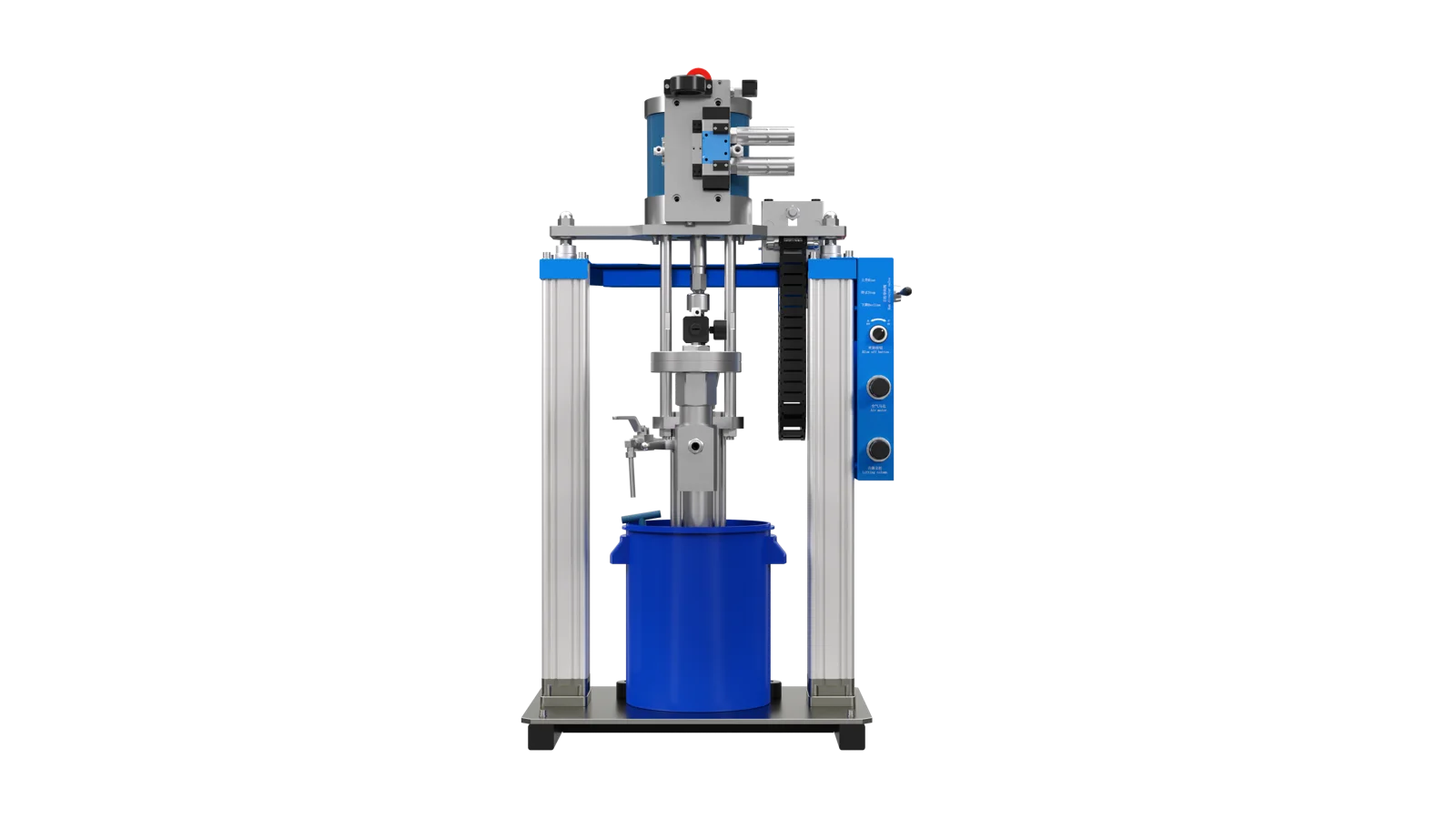
Single-Component 5-Gallon Adhesive Supply Pump
Designed for high-viscosity adhesives and greases, ensuring stable performance with various dispensing valves for precise supply.
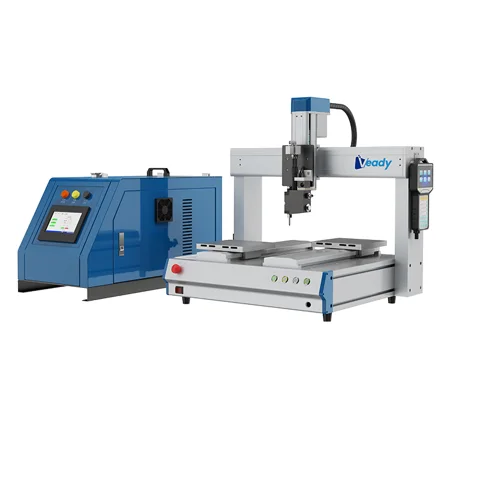
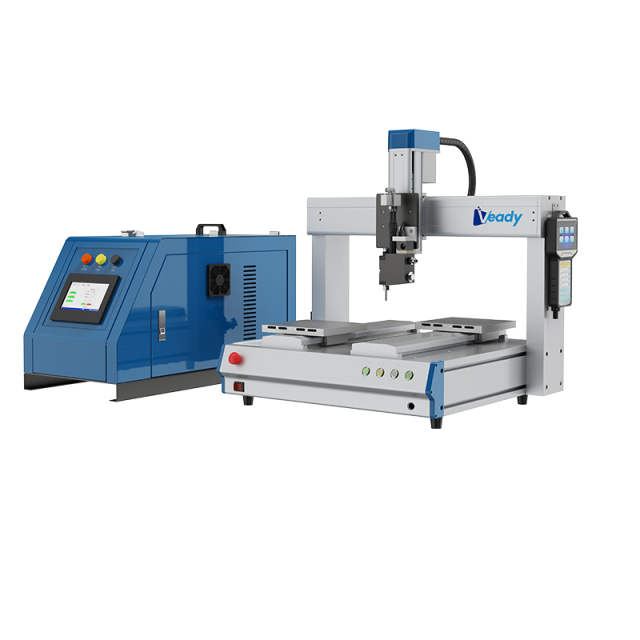

Model WD-T4221S
Desktop dual Y-axis platform dispensing machine features high efficiency, high precision and small space occupation, suitable for various dispensing applications.
Desktop dual Y-axis platform dispensing machine adopts dual-station alternate operation for high efficiency, is compatible with various dispensing valves, and meets diverse automated dispensing requirements.
Specifications:
Product Applications:
Communication Equipment, LED, Semiconductors, VCM, CCM, Micro Motors, 3C Consumer Electronics, Automotive Electronics.
Two work stations, one gantry — that is the idea behind the Dual-Station Dispensing Machine. The platform carries two independent Y axes, so while the head lays adhesive on the part in one station, the operator can unload a finished carrier and load the next one in the other. Part handling runs alongside dispensing instead of interrupting it, which keeps the machine working through short cycles.
Each unit is configured around the job rather than adapted afterwards: valve, bracket, feed and station layout are set at build by the dispensing machine manufacturer, so the platform arrives matched to the adhesive you actually run.
Typical users are electronics, micro motor, sensor and automotive electronics producers running dots, lines and small fills on parts that are too small, or too repetitive, to glue by hand.
The two stations sit side by side on the same frame and share the head, so treat the platform as two working areas served by one gantry. When you size it, measure the largest part or carrier you intend to run — including its fixture — and add the clearance the nozzle needs to approach and lift away. If a part fits one station with room to spare, the smallest frame is normally enough.
Step up when the work grows: multi-up panels, long carriers and heavier valve or feed assemblies use the extra room of the mid or large frame, and leave more travel in hand for future products.
Plan the bench as carefully as the machine. Leave space for the pendant, the adhesive feed and cable routing, and check that fixtures can be loaded without lifting parts over the gantry. In plants running one product family on a single shift, the compact frame often ends up doing duty as a dedicated desktop industrial glue dispenser.
As the manufacturer, Suzhou Veady Precision Glue Dispensing Systems Co., Ltd supports your project from selection through startup. Share your adhesive, substrate, throughput and accuracy target, and our engineers help match the right dispensing, potting, vacuum potting or material preparation configuration. We also guide installation and commissioning, process parameter setup, and fault troubleshooting, and provide factory-direct service and bulk supply for long-term production.
It is built for repeat production rather than sampling. The two stations alternate so the head is not idle while parts are changed, and a saved program repeats the same path on every unit. Plants that start at low volumes usually stay on the same platform as volume rises, because a second fixture or a multi-up carrier is the first step rather than a second machine.
One operator is normally enough. They load and unload parts, start the saved program and check the first part of each batch; the platform then runs as an automatic dispensing machine and follows the taught path without being guided. Attention goes into part handling and quality checks rather than into the dispensing itself.
Yes. As the dispensing machine manufacturer we build each unit around the job: valve type, bracket, material feed and station layout are agreed before production, using your adhesive datasheet and part drawing. Mark the dispensing area on the drawing so the working area and fixture position can be checked against the frame you are considering.
This platform dispenses from a single feed — adhesive is supplied to the valve, then laid along the taught path, which makes it a glue dispensing machine for dots, lines and small fills. Two-component materials need proportioning and mixing upstream of the nozzle, and our AB dispensing and potting machines cover that work. Tell us the material and we will say which route suits your part.
Each side has its own saved path, so one station can hold product A while the other holds product B, and the operator simply chooses the program for the side being loaded. That makes the platform useful as a mixed-batch industrial glue dispenser. If the two parts need very different working areas, check both against the station dimensions before choosing the frame size.
Dispensing valves and nozzles are the parts that wear or block first, followed by feed tubing and syringes. Holding one spare valve assembly and a set of nozzles means a blockage does not stop the dispensing machine mid-batch while a replacement is on its way. We supply the valves, accessories and consumables that fit this platform.
| Specification | Published configuration |
|---|---|
| Model Number | WD-T4221S |
| Working Stroke | 400*200/200*100mm |
| Overall Dimensions | 645*515*735mm |
| Machine Weight | 60kg |
| Moving Speed | 500mm/sec(XY) / 200mm/sec(Z) |
| Repeatability | ±0.02mm |
| Z-axis Load | 5/10kg |
| Spindle Drive | Servo Motor / Ball Screw |
| Programming Method | Handheld Teach Pendant |
| Number of Motion Axes | 3/4 |
| Dispensing Method | Syringe, Jet Valve, Screw Valve (Optional) |
| Operating System | Independent R&D |
| Specification | Published configuration |
|---|---|
| Syringe valve | Fine dots and lines with low- to medium-viscosity adhesives |
| Jet valve | Non-contact dispensing where the nozzle must stay clear of the part |
| Screw valve | Positive-displacement feed for thicker or filled adhesives |
| Valve mounting | Bracket and stand-off set for the valve confirmed at order |
| Adhesive matching | Valve and feed selected from your material datasheet |
| Station paths | A separate saved path for each side of the platform |
Specifications describe the published configuration. Confirm material compatibility, options and final performance requirements with Veady.
Designed for high-viscosity adhesives and greases, ensuring stable performance with various dispensing valves for precise supply.
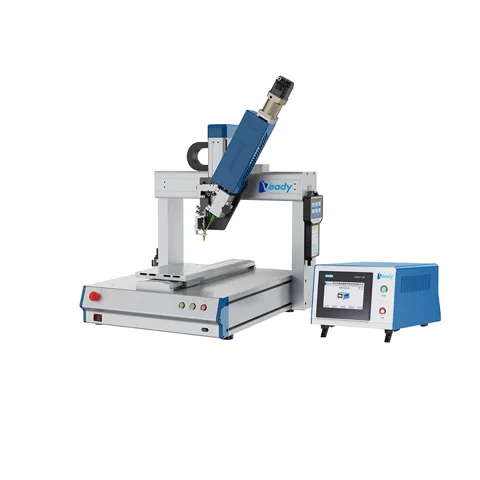
Desktop dispensing machine features high efficiency, high precision and small space occupation, suitable for various dispensing applica…
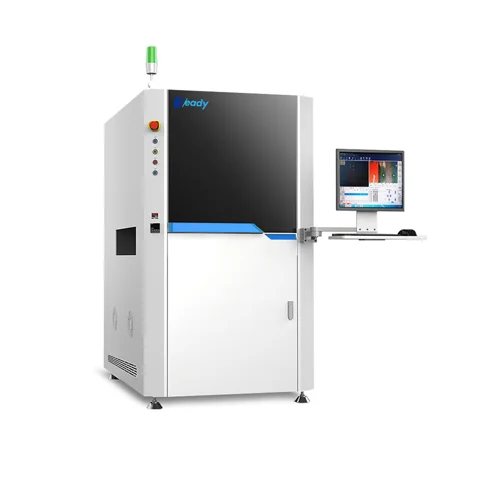
Online Vision High-Speed Dispensing Machine provides high-speed and high-precision fully automatic dispensing solutions for SMT electro…
Tell us what you need to dispense, pot or encapsulate.
veady@szweidi.comWhatsApp Ms. TangShare your material, part and process requirements with the Veady team.