
Move over the image to inspect details, or click to enlargeTap the image to inspect details
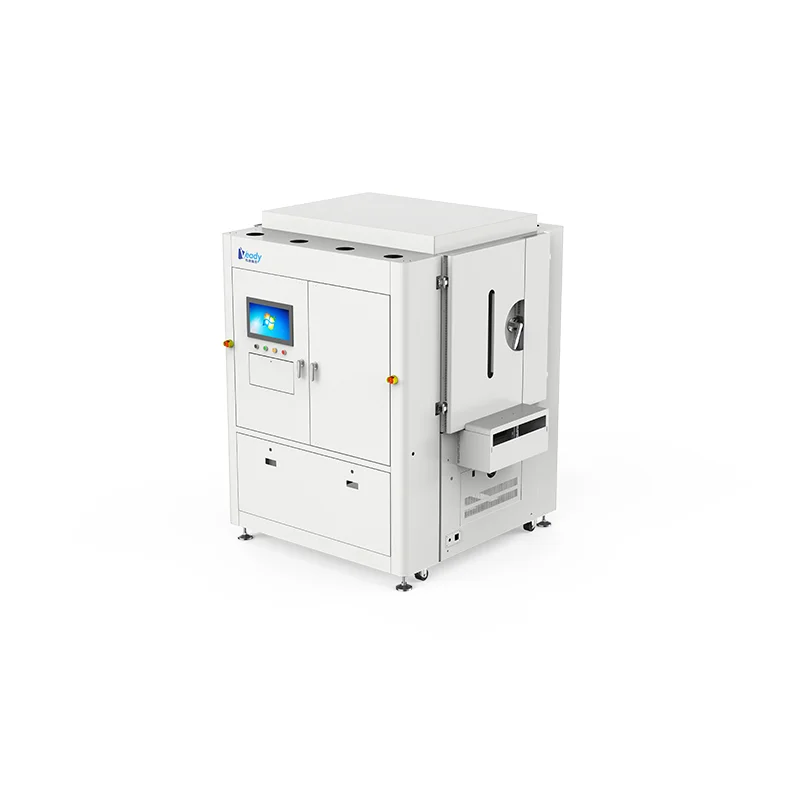
Vertical Curing Oven
- Model
- WD-5010
With a sealed vertical design and unique horizontal airflow, it optimizes energy efficiency without compromising heating performance.
Explore this part of the adhesive process
Product Features:
This system features a unique horizontal airflow and sealed design that ensures uniform temperature stability while saving space and energy. Equipped with intelligent temperature control and servo positioning, it supports automated data monitoring for high-quality curing of conformal coating and potting adhesive.
Specifications:
Applications:Smartphones, laptop & PCB conformal coating, IGBT semiconductors, automotive sensors, AB potting, etc.
Heating & Airflow Design
- Sealed chamber: the doors close on a fully enclosed cabinet, so heated air is not lost to the room, parts cure in a stable environment and the chamber holds its heat with less energy input.
- Horizontal airflow: air sweeps across each tier instead of dropping in from the top, which keeps parts loaded side by side at a similar temperature through the cycle.
- Programmable temperature control: recipes are set and held from the controller, so a schedule that works on the first batch repeats on the next shift.
- Servo-driven load handling: the mechanism moves each tier in a controlled, repeatable way, so a tier is not indexed short or long between runs.
- Compact vertical footprint: tiers stack upward rather than stretching along the line, so the cabinet fits into cells where the curing stage has to share floor space with existing dispensing solutions.
- Automated data monitoring: the controller records each run, giving you a cure record to match against a batch.
Installation & Commissioning
- Check the route and the floor before delivery: the cabinet is a large freestanding unit, so confirm door widths, lift access and the load-bearing capacity of the floor where it will stand.
- Prepare the services: bring the power supply and compressed air line to the install point, and confirm the room ventilation the chamber needs.
- Position and level: roll the cabinet on its casters, level it, and leave clearance at the front control panel and the side access door for loading and service.
- Leave working room around neighbouring adhesive dispensing equipment, so racks can be loaded and unloaded without crossing the oven's airflow path.
- Connect the top ports and the air supply, then check that airflow runs across the tiers as it should before the first heated cycle.
- Commission with a trial batch: load a representative mix of parts, run the cure schedule and compare the result against the coating or potting adhesive supplier's recommendation.
- Train operators on recipe selection at the touchscreen and on loading the tiers, then run a repeat batch to confirm the result before full release.
Maintenance & Care
Keep the inside of the chamber clean: wipe the tiers and the cabinet floor once the oven is cool, and clear coating or adhesive drips before they bake on. Load parts so they do not sit across the airflow path — a tray that blocks the horizontal stream affects the parts behind it more than the parts on it. Treat the door seals as a routine check; a seal that has lost its grip lets heat escape and makes the profile harder to hold. Verify chamber temperature against a reference at regular intervals, especially after the oven has been moved or a recipe changed. After a long shutdown, run a dry cycle before production to clear residue and confirm the profile. The controller keeps a record of each run, so batch history can be called up rather than written down by hand.
Technical Support & Model Matching
As the manufacturer, Suzhou Veady Precision Glue Dispensing Systems Co., Ltd supports your project from selection through startup. Share your adhesive, substrate, throughput and accuracy target, and our engineers help match the right dispensing, potting, vacuum potting or material preparation configuration. We also guide installation and commissioning, process parameter setup, and fault troubleshooting, and provide factory-direct service and bulk supply for long-term production.
FAQ
Q1 Can the same oven cure conformal coating and potting adhesive?
Yes. Each material family runs its own recipe, so boards that leave the industrial glue dispenser with wet coating and potted housings filled with AB adhesive can be cured in the same chamber. Keep dedicated trays or carriers for each material and clean the tiers when you switch families.
Q2 How do I choose the number of heating zones?
Count the ramp and hold steps in your cure schedule and the number of materials you run in a shift. A single stable schedule usually needs fewer zones, while several profiles or a slow ramp on a thick potted part call for more. Send us the schedule and, as a dispensing machine manufacturer, we will set the zone count around the material you actually run.
Q3 How is the chamber loaded and monitored during a cure?
Parts load through the side access door onto the tiers, and the cabinet can be rolled into position on its casters during installation. The embedded touchscreen on the front control panel carries recipe selection and run data, and the side viewing window lets an operator check the load without opening the chamber mid-cycle.
Q4 Will the oven fit at the end of our existing line?
In most cases, yes. The cabinet works as the cure stage after an automated dispensing system, taking loaded racks from the dispense point into the chamber. Share your line layout and rack size with us so the load and unload direction, floor space and clearance at the access door are planned before delivery.
Q5 What are the signs that a cure recipe needs adjusting?
A coating that stays tacky, a potting surface that feels soft under normal handling, or parts that vary across one tier all point to the profile rather than the material. Check the airflow path first, because a blocked tier changes the result for everything behind it, then review the ramp and hold against the adhesive supplier's schedule.
Q6 What should be ready before the oven is installed?
Have the power supply and compressed air service brought to the install point, the floor checked for loading, and room ventilation confirmed. Clear the route from the delivery entrance and leave working space around the cabinet and any neighbouring adhesive dispensing equipment, so racks can be loaded without crowding the chamber.
Technical specifications
| Parameter | Specification |
|---|---|
| Equipment Name | Vertical Curing Oven |
| Model Number | WD-5010 |
| Overall Dimensions | X=1800 × Y=1700 × Z=2200 mm |
| Heating Zones | 2-6 Heating Zones |
| Temperature Range | Ambient to 300 °C |
| Temperature Accuracy | ≤±3 °C |
| Loading Capacity | 16-48 tiers (product height dependent) |
| Power Supply | AC380V, 50 Hz, 30 kW |
| Air Supply | 0.5-0.7 MPa |
| Weight | Approx. 1500 kg |
Technical specifications for the listed model. For application engineering, share your adhesive datasheet, part drawing and production requirements.