Automated Potting Solutions for Automotive Electronics Manufacturing
A practical read for teams comparing potting workflow options in automotive electronics lines, with a focus on repeatable process control and production fit.
Read article
Offline Automatic Potting
The APS-641 is positioned for buyers who need a 3-axis gantry potting station with stable motion control, practical adhesive handling, and a clear offline workflow for engineering review.
Teams comparing potting machine manufacturers and automatic potting machine manufacturers can use this page to review the motion structure, material handling, and project fit before moving to supplier discussion.
The product is especially relevant for electronics and energy production lines that need repeatable potting routes, stable two-component adhesive feed, and a compact station that supports sample checks.
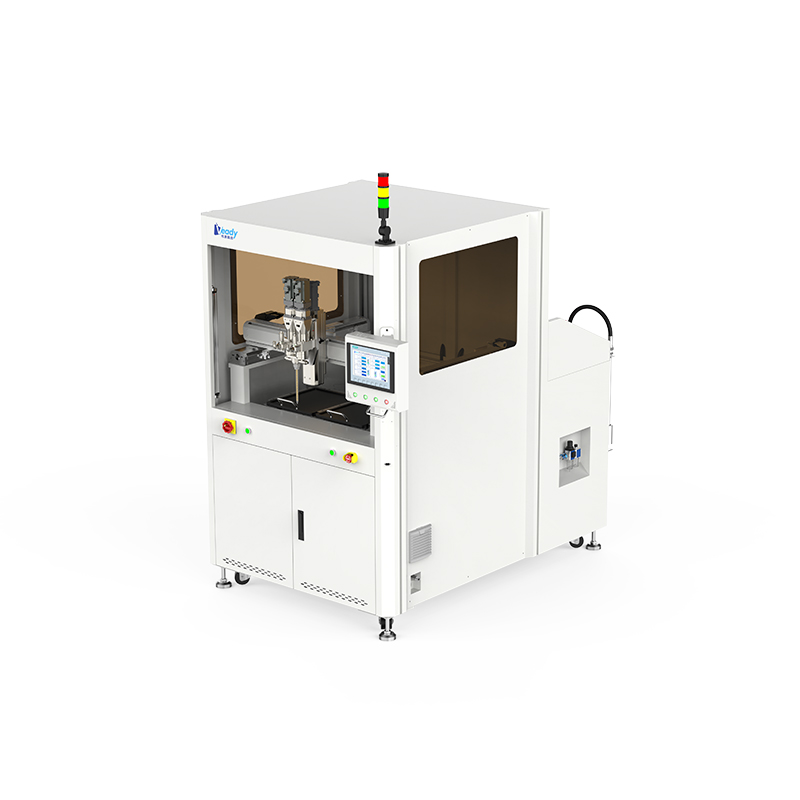
APS-641 is presented as a gantry 3-axis offline automatic potting machine for controlled adhesive application. The product is suited to projects that need repeatable trajectories, stable material preparation, and a separate station for process review before line deployment.
| Item | Detail |
|---|---|
| Product Name | APS-641 Offline Automatic Potting Machine |
| Motion Structure | 3-axis gantry structure for repeatable trajectory control |
| Mechanical Precision | +/-0.02 mm |
| Dispensing Speed | 1-5 g/s |
| Adhesive Support | Two-component adhesive handling with stable preparation flow |
| Tank Options | 10L / 20L / 45L / 60L |
| Material Preparation | Heating, stirring, defoaming, circulation, and liquid level monitoring |
| Application Focus | Automotive electronics, photovoltaic modules, and similar precision assemblies |
| Project Notes | To be confirmed by project requirements |
The gantry structure supports consistent motion paths for electronics and energy assemblies that need stable adhesive placement.
Heating, stirring, defoaming, circulation, and level monitoring help keep the adhesive condition more uniform during offline work.
The format supports sample evaluation, utility checks, and procurement discussion without pushing the buyer into a thin summary page.
These technical articles help buyers compare application fit, machine structure, and industrial use before sending an inquiry.
A practical read for teams comparing potting workflow options in automotive electronics lines, with a focus on repeatable process control and production fit.
Read articleUseful for sourcing teams reviewing motion precision, gantry structure, and adhesive handling before discussing machine configuration.
Read articleA selection-focused article that connects the APS-641 format with industrial production environments, project review, and application planning.
Read articleThe comments below reflect realistic sourcing review points for offline potting equipment.
5/5 Rating
"The machine layout gave our team enough detail to compare trajectory control, process stability, and utility planning before sample review."
Procurement Manager, Germany
5/5 Rating
"We needed a separate offline station for two-component potting, and the page made it easy to compare handling points with our line team."
Process Engineer, Singapore
5/5 Rating
"The three article links and the specification table helped us brief purchasing and engineering without extra back-and-forth."
Equipment Buyer, Mexico
These questions help buyers prepare a cleaner inquiry for sample handling, line review, and workstation planning.
The APS-641 fits controlled potting tasks that need repeatable motion paths, stable adhesive feed, and a separate offline station for material handling, process checks, and sample review.
A 3-axis gantry helps the nozzle move along defined coordinates, which supports access to different component shapes, cleaner trajectory control, and more repeatable adhesive placement.
Buyers should confirm adhesive type, tank size, utility needs, station footprint, sample quantity, packing expectations, process targets, and the final project documents required for review.
The vertical video helps sourcing teams review the machine's general motion pattern, operator access, and working layout before checking the product image, specification table, and quote details.
Relevant features include heating, stirring, defoaming, circulation, and liquid level monitoring, since these help keep the adhesive condition more stable during offline production work.
A sample evaluation should cover trajectory accuracy, dispensing consistency, material condition, cleaning steps, operator access, utility connections, and final fit for the intended production environment.
