
Move over the image to inspect details, or click to enlargeTap the image to inspect details
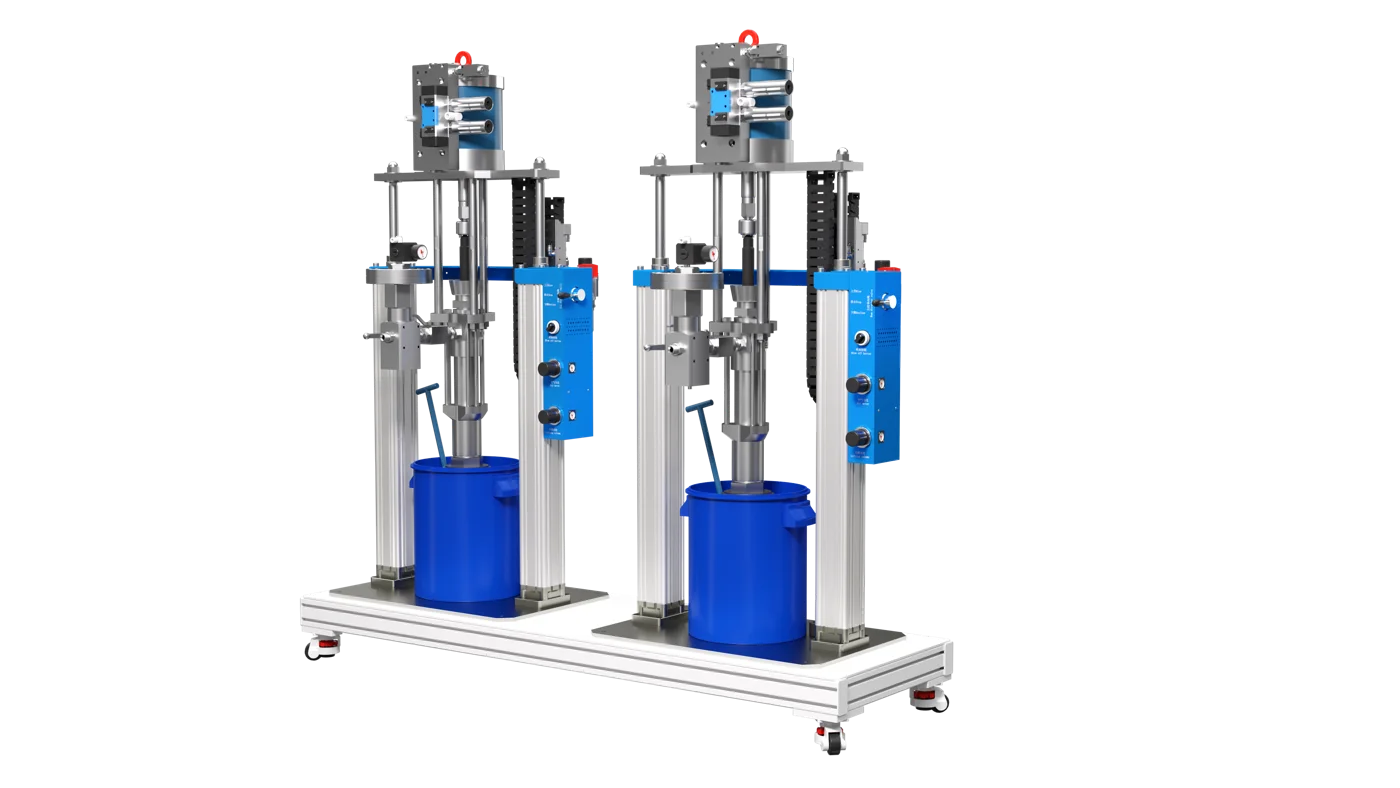
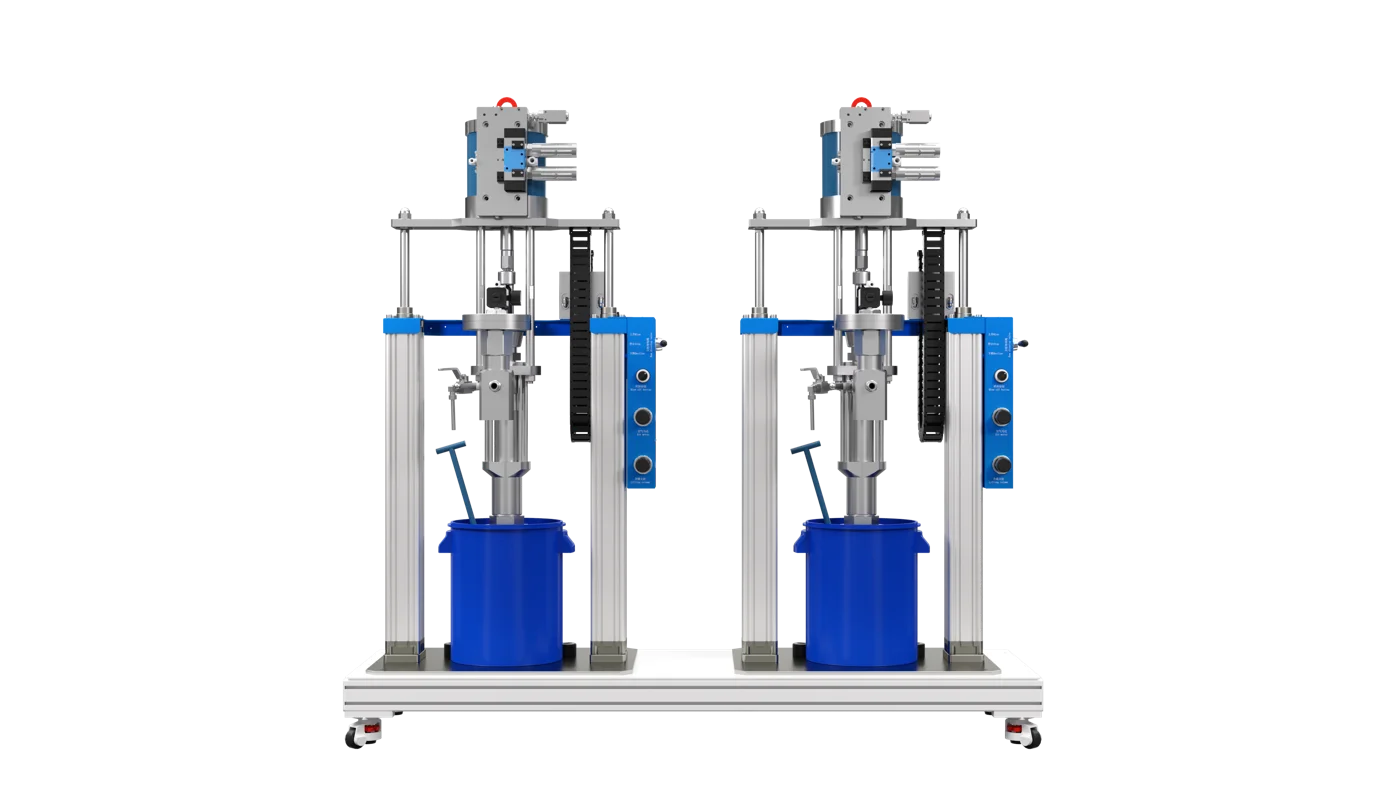
Dual-Cartridge 5-Gallon Dispensing Pump
- Model
- C40/5-Gallon
Engineered for high-viscosity adhesives and grease materials, ensuring stable compatibility with various metering valves for precise dispensing.
Explore this part of the adhesive process
Product Features:
This feeding system is equipped with low-level alarm and one-touch pressure release functions. Configurable heating options for the pump, pressure plate, and hoses are available based on material characteristics. Suitable for dual-component, 5-gallon packaging of high-viscosity adhesives.
Specifications:
Suitable Adhesives:Two-component thermal adhesives, sealants, structural adhesives, and grease materials
Product Applications:Controllers, home appliances, gearboxes, power tools, photovoltaic panels, ECU, OBC, CDU automotive components, etc.
Adhesive & Grease Compatibility
- Two-component thermal adhesives — heat-conducting grades that stay thick at room temperature and usually need heated hoses or a heated plate to move cleanly to the valve.
- Sealants — silicone and moisture-cure sealant packs stay closed between shifts, which keeps skin formation down in the adhesive dispensing system.
- Structural adhesives — epoxy and polyurethane grades used where the joint carries load; these normally run unheated, and plate pressure matters more than temperature.
- Grease materials — thermal and filled greases feed straight from the pack without premixing or thinning.
- Confirm your grade before ordering — filler content and viscosity decide whether heating is worth adding to the build. As glue dispensing machine manufacturers, we check your datasheet against the pump before it is made.
Typical Applications
Plants use this pump wherever a 5-gallon pack of heavy adhesive has to reach a dispensing head without stopping the line. Automotive and NEV work is the clearest case: it feeds cells building ECU, OBC and CDU assemblies, applying metered beads of thermal and structural adhesive to housings and connectors. Appliance and controller production uses it for bonding and sealing smaller assemblies, while gearbox and power tool lines run it on joints that are loaded in service. Photovoltaic panel production relies on it for frame bonding and junction box sealing, where filled material and long hose runs make steady pressure more important than speed. On most sites the unit stands at the end of the cell so it keeps an industrial glue dispenser supplied through a full shift.
Heating & Control Options
Installation & Air Supply
- Confirm the material and pack format first — tell us the adhesive or grease grade and confirm it arrives in dual-component 5-gallon packaging, since the cartridge and plate geometry are set at build.
- Reserve a clear standing position — leave space at the cell to raise the plate and stage a fresh pack beside the unit.
- Connect regulated plant air — bring a filtered air line to the pump, set the regulator for your valve and check the joints for leaks.
- Seat the plate and prime the line — lower the pressure plate squarely into a full pack and bleed the hose until material reaches the valve without air pockets.
- Run a short trial batch — check bead weight and appearance against your target and fine-tune at the metering valve rather than at the pump.
- Book the start-up review — our engineers check air layout, hose routing and valve settings before the first production run, and as the dispensing machine manufacturer we stay with the unit through commissioning.
Technical Support & Model Matching
As the manufacturer, Suzhou Veady Precision Glue Dispensing Systems Co., Ltd supports your project from selection through startup. Share your adhesive, substrate, throughput and accuracy target, and our engineers help match the right dispensing, potting, vacuum potting or material preparation configuration. We also guide installation and commissioning, process parameter setup, and fault troubleshooting, and provide factory-direct service and bulk supply for long-term production.
FAQ
Q1 Is this pump only for two-component materials?
Yes. The unit is a pneumatic glue dispenser built around dual-component 5-gallon packs, so both cartridges are sized for that format and the plate seals to it. For single-component grease or a coated pail, a pressure-plate or drum feeder is the better fit — as adhesive dispensing equipment manufacturers we build those as well, and we will point you to the right one once we know your pack size and shot rate.
Q2 Can we add heating after the pump is installed?
The heating options are configurable, but they are chosen when the unit is built, because the pump body, pressure plate and hoses are prepared differently depending on which zones you need. It is worth settling this early with your material datasheet in hand: a grade that flows cold may need nothing, while a filled thermal adhesive usually wants heat at the plate and along the hose.
Q3 What happens when a pack runs low mid-shift?
You will know before the pack empties, which is the point of the level monitoring — the operator can stage the next pack and pick a natural break to change it instead of being caught mid-batch. On most lines that means the adhesive dispensing system keeps running through the shift and the changeover happens during a scheduled pause rather than as an unplanned stop.
Q4 Can one pump run both grease and thermal adhesive?
Mechanically yes, but the two materials need a proper changeover: purge the hose and valve, clean the plate and check the seals before the new material goes in. Thermal adhesive and grease also differ in how they behave cold, so if you plan to alternate regularly, tell us and we will set the heating and valve recommendation around the pair rather than around one of them.
Q5 What routine maintenance does the pump need?
Keep the plate and cartridge seal clean, and wipe material off the plate face at every pack change so the next pack seats properly. Leave a part-used pack sealed, and bleed the line before restarting after a long shutdown so the hose does not sit full of material that has started to set. A short daily check of the air joints and the level alarm is usually all that is needed between services.
Q6 Does this pump suit low-volume work?
It is aimed at production that gets through 5-gallon packs at a steady rate, where the plate and cartridges can stay loaded between shifts. If you only dispense small amounts now and then, a smaller benchtop unit is usually a better match. If your volumes sit between the two, tell us your shot size and how often you change packs so we can advise on the right unit.
Technical specifications
Technical specifications
| Parameter | Specification |
|---|---|
| Equipment Name | Dual-Cartridge 5-Gallon Dispensing Pump |
| Model | C40/5-Gallon |
| Feed Pump | Pneumatic Piston Pump |
| Dispensing Rate | Single Dispensing Volume: 60 cc |
| Heating Temperature | Ambient Temperature to 80 °C |
| Operating Air Supply | 0.5-0.7 MPa |
| Dimensions | L=600 × W=750 × H=1550 mm |
| Weight | Approx. 55 kg |
Additional specifications 2
| Parameter | Specification |
|---|---|
| Heating zones | Pump, pressure plate and hoses |
| Zone options | Zones specified together or on their own |
| Heating range | Ambient temperature to 80 °C |
| Thermal setting | Fixed at build from the material datasheet |
| Heating purpose | Keeps high-viscosity material moving to the valve |
| Hose heating | Heated run to the valve when the material needs it |
| Level alarm | Warns before the pack runs dry |
| Alarm value | Gives the operator time to plan the next pack |
| Pressure release | One-touch, operated at the pump |
| Release function | Relieves pressure on the material line |
Technical specifications for the listed model. For application engineering, share your adhesive datasheet, part drawing and production requirements.
More product views