Move over the image to inspect details, or click to enlargeTap the image to inspect details
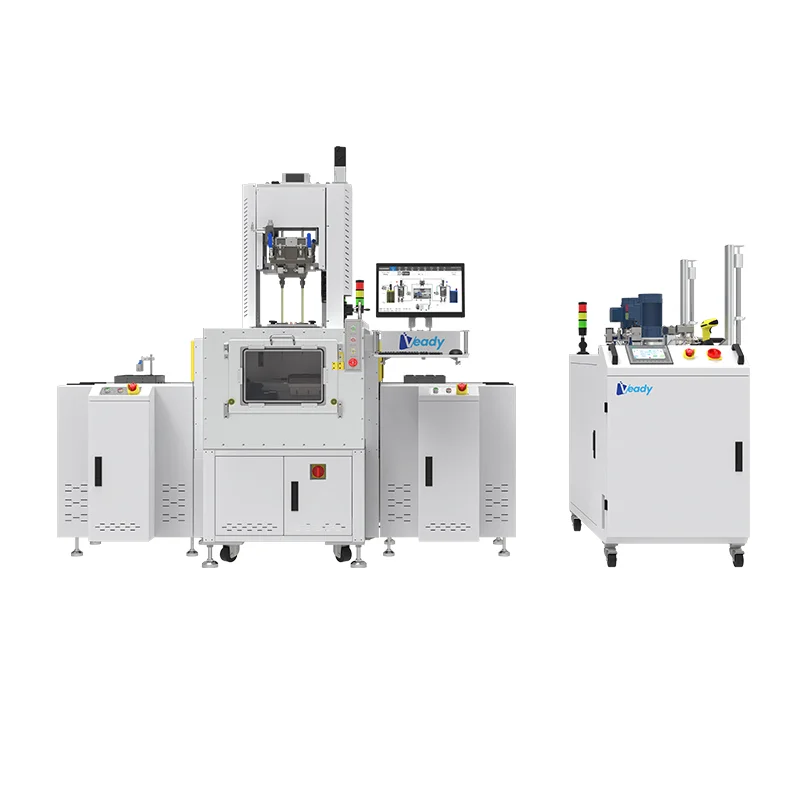
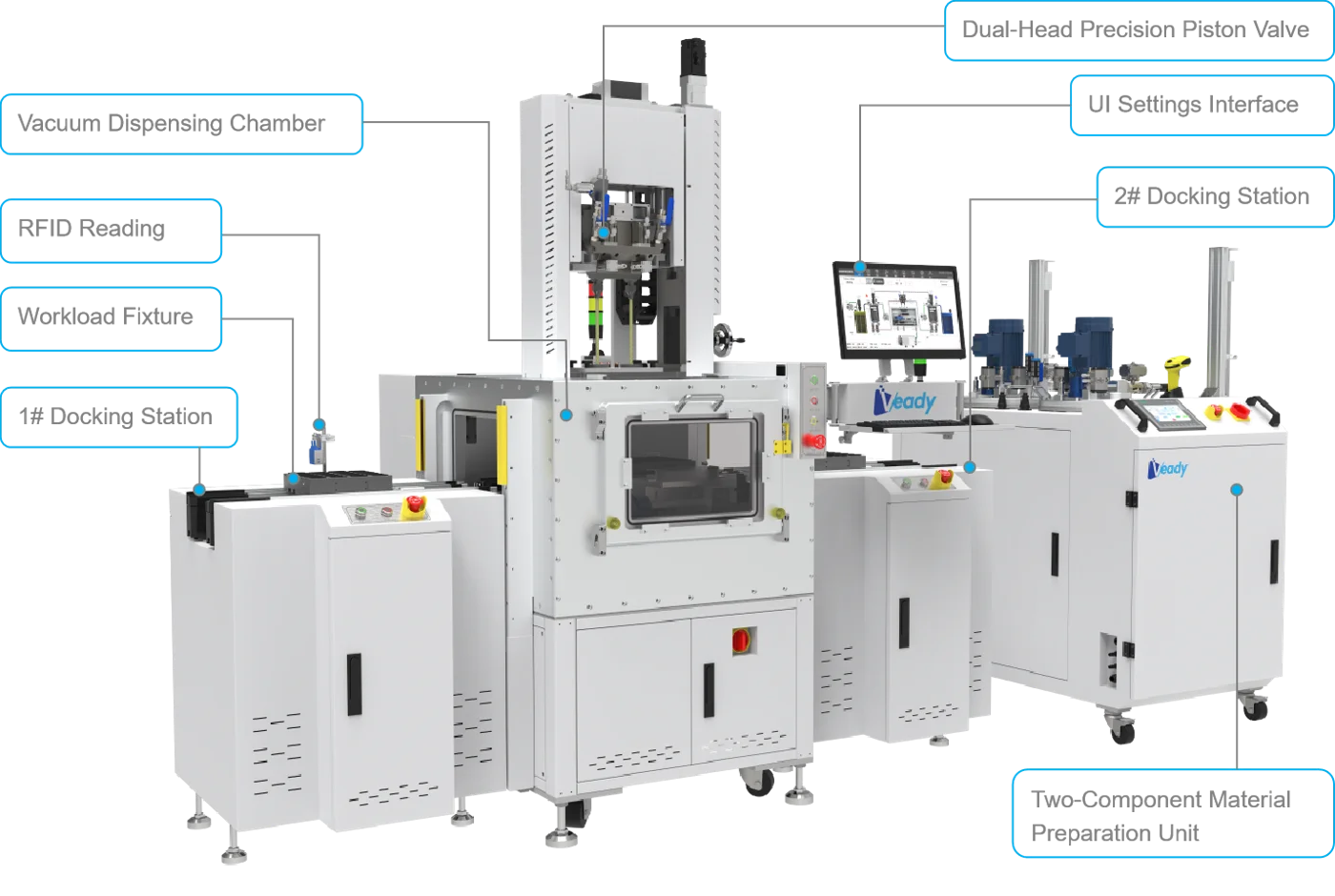
In-line Vacuum Potting Machine
- Model
- VPS-541
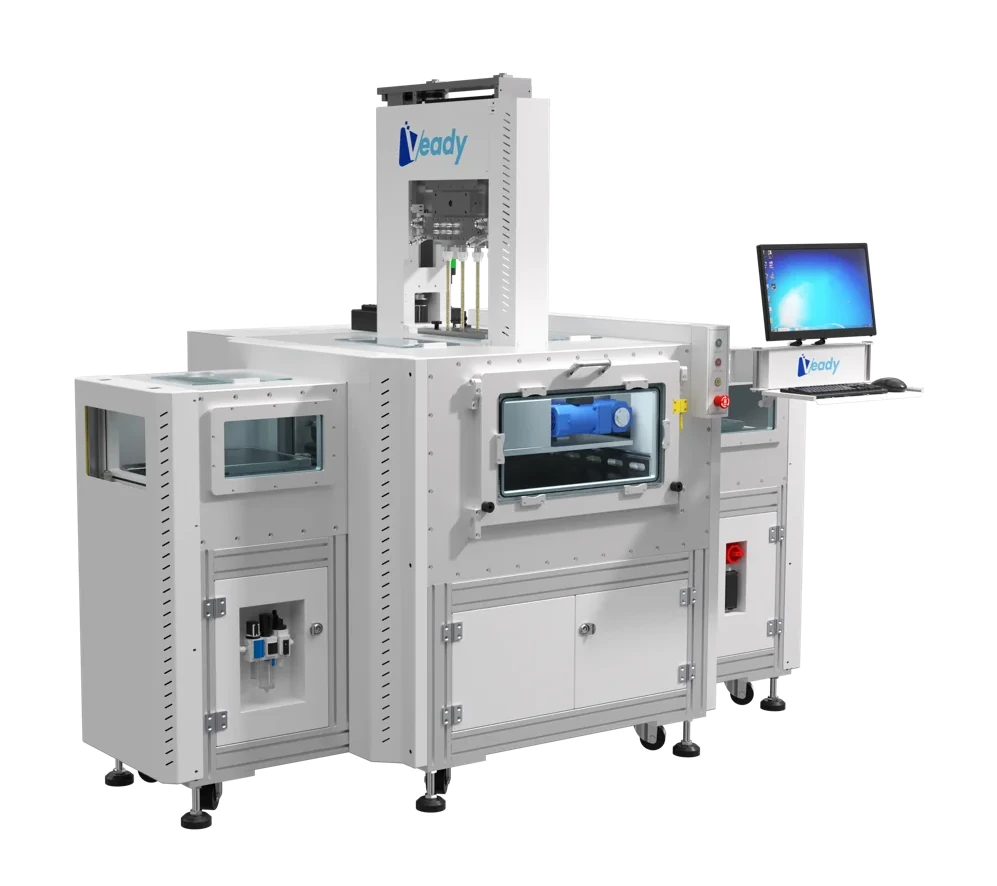
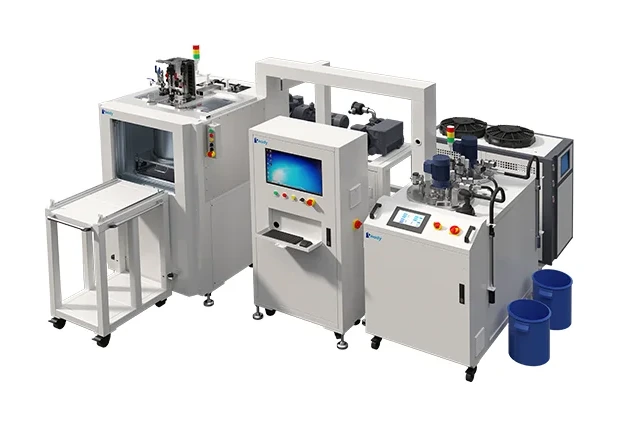
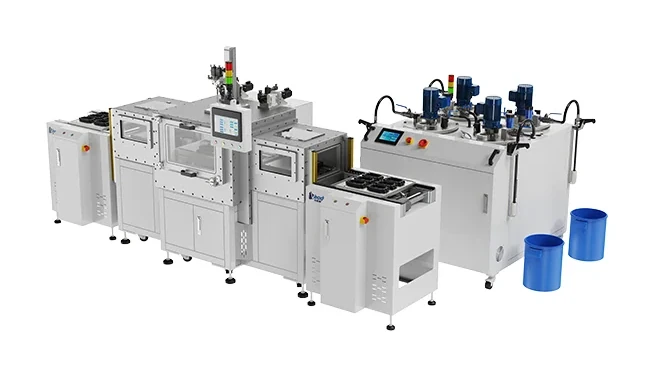
In-line automatic vacuum potting operation with a maximum vacuum level of 2mbar. It adopts tray fixture feeding, vacuum dispensing, and tray fixture discharging, enabling efficient automated production.
Explore this part of the adhesive process
Product Features:
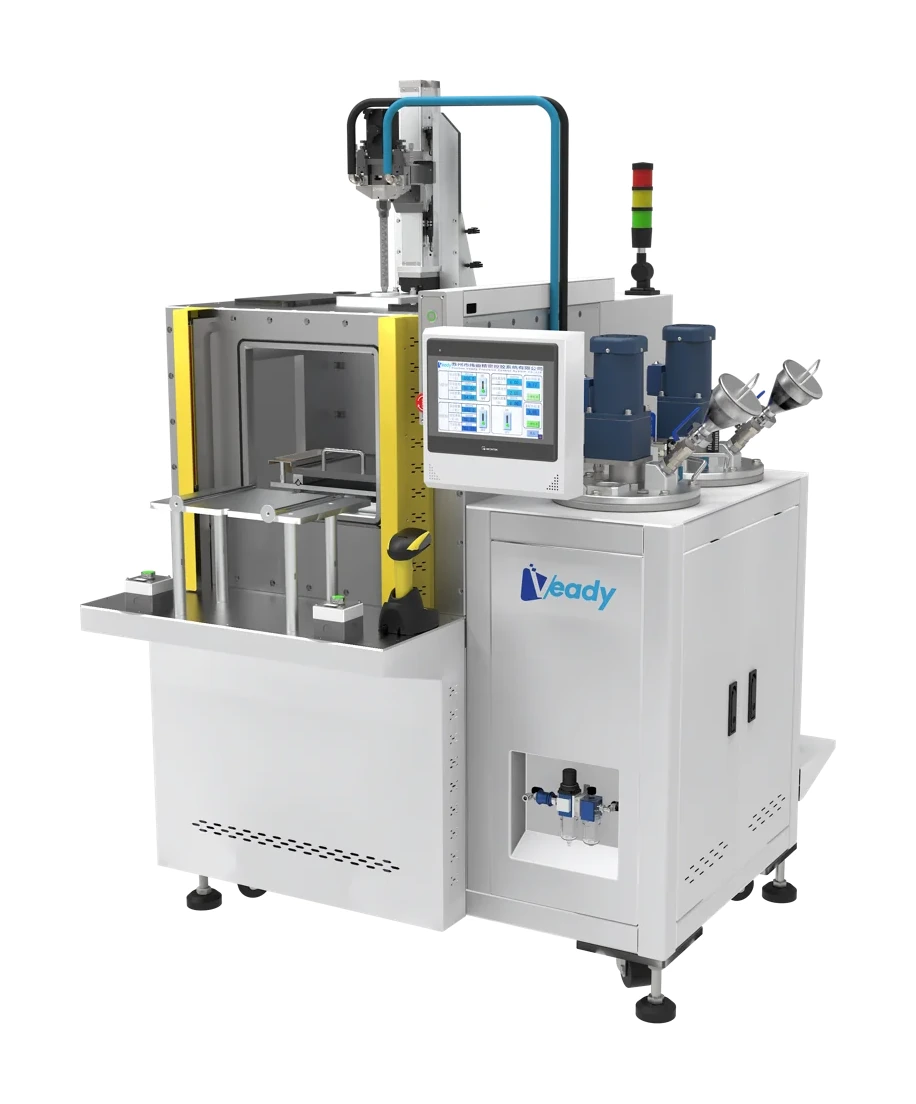
A full vacuum environment ensures bubble-free product potting. The A/B material tanks are equipped with heating, stirring, liquid level monitoring, defoaming, circulation, reflow, and other functions. The three-axis motion system, combined with independently developed control software, enables on-demand proportioning, mixing, and quantitative automatic vacuum potting operations for two-component adhesives.
Technical specifications
| Parameter | Specification |
|---|---|
| Equipment Name | In-line Vacuum Potting Machine |
| Model Number | VPS-541 |
| Effective Stroke | X=500 × Y=400 × Z=100 mm |
| Vacuum Pressure | 1-2 mbar |
| Vacuum System | 100-300 m³/h |
| Proportion Precision | ≤±3% |
| Dispensing Precision | ≤±3% |
| Dispensing Speed | 3-10 g/s |
| Material Preparation System | MFS4545 (A: 45L / B: 45L) |
| Power Rating | AC380V, 50 Hz, 12.5 kW |
| Operating Air Supply | 0.5-0.7 MPa |
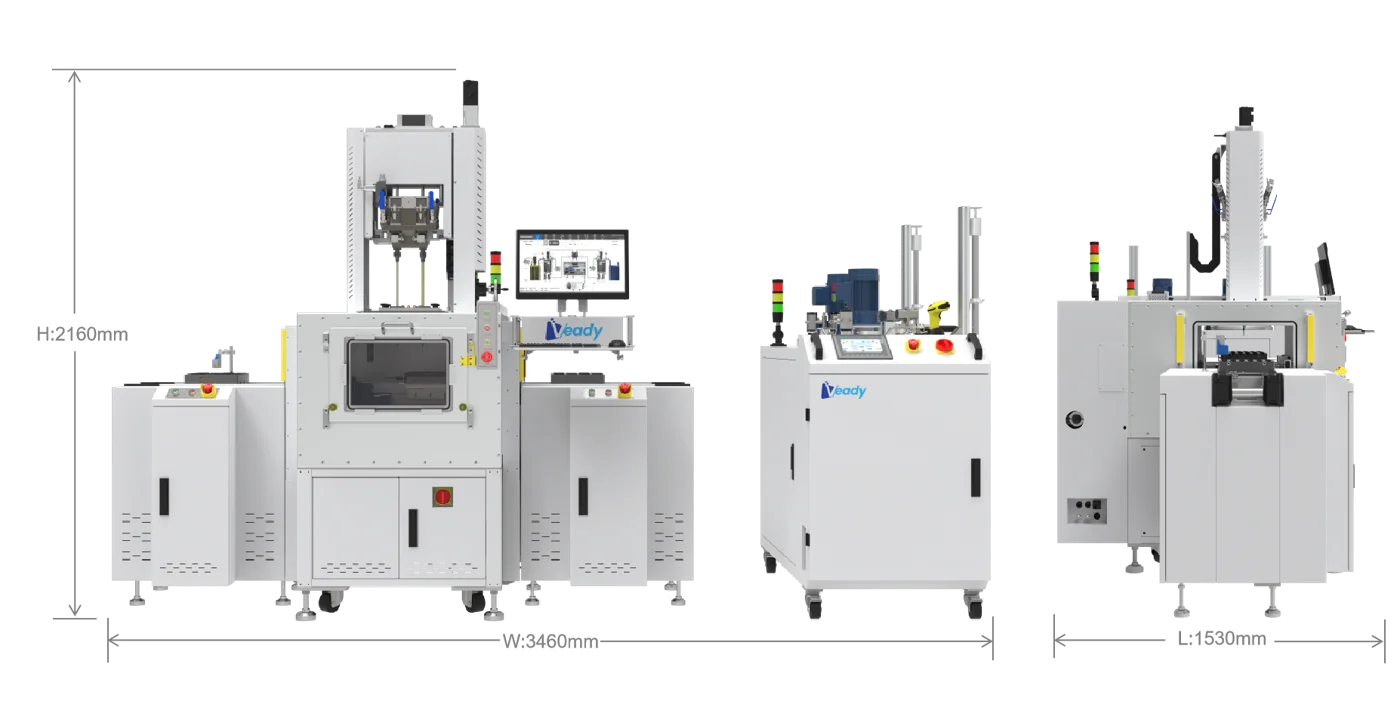
| Overall Dimensions | VPS-541: L=1530 × W=2230 × H=2160 mm MFS4545: L=1250 × W=700 × H=1250 mm |
| Machine Weight | Approx. 450 kg + 280 kg |
Technical specifications for the listed model. For application engineering, share your adhesive datasheet, part drawing and production requirements.
Suitable Adhesives:Epoxy resin, polyurethane, thermally conductive silicone, organic potting compound and other two-component proportioned mixing materials.
Product Applications:Automotive electronics, capacitors, new energy motors, high-tension coils, ignition coils, electromagnetic coils, motor stators, sensors, etc.
Product Overview
Built to sit inside a production line rather than beside it, this vacuum potting machine takes trays of parts in on their fixtures, pots them under vacuum, and discharges the same trays without an operator handling adhesive. The compound is proportioned, mixed and metered on demand, so only the material the tray in front of the head needs is prepared.
A three-axis gantry carries the dispensing head across each tray, and the machine is supplied together with an A/B material preparation unit that keeps both components conditioned until they are metered.
It suits plants potting a consistent part family in steady volumes — electronics, motor and automotive component production where the encapsulation has to come out the same on the last tray as on the first. Veady is one of a limited number of glue dispensing machine manufacturers that also builds the potting chamber, the material tanks and the control software in-house.
Key Features
- Bubble-free potting — dispensing happens inside a full vacuum environment, so air trapped in windings, slots and housings is drawn out before the compound gels. That is the difference between a clean encapsulation and one that develops voids, hot spots or partial discharge later in the field.
- On-demand proportioning and mixing — this automated dispensing system meters and mixes the A and B components at the head for the tray in front of it, so what reaches the part is the ratio the machine set rather than the result of hand mixing.
- Tray fixture handling — parts stay located in their fixtures from entry to discharge, keeping the dispensing path identical cycle after cycle and protecting delicate leads and terminals.
- Three-axis motion with in-house software — the head follows a programmed path over each tray, and product parameters live in the control software instead of an operator's notebook.
- One matched set — potting station, material unit and software are configured together by the same dispensing machine manufacturer, so they arrive as a working system rather than separate items to integrate on site.
Material Preparation & Conditioning
Material supply is where vacuum potting equipment usually earns or loses its stability, and this machine treats it as part of the process rather than an accessory. The A and B components are held in temperature-controlled tanks, and heating brings high-viscosity or filled compounds to a workable flow instead of leaving them too thick to meter cleanly.
Stirring runs continuously to keep fillers suspended, so the mix that leaves the head early in a run matches what leaves it at the end. Liquid level monitoring flags a tank that is running low rather than letting a tray pass under-filled, and a defoaming stage takes entrained air out before the material is metered. Circulation and reflow keep compound moving through the lines and back to the tanks, which is what prevents settling and skinning during pauses in production.
Technical Support & Model Matching
As the manufacturer, Suzhou Veady Precision Glue Dispensing Systems Co., Ltd supports your project from selection through startup. Share your adhesive, substrate, throughput and accuracy target, and our engineers help match the right dispensing, potting, vacuum potting or material preparation configuration. We also guide installation and commissioning, process parameter setup, and fault troubleshooting, and provide factory-direct service and bulk supply for long-term production.
FAQ
Q1 Can this potting machine run more than one product?
Yes. The control software holds a dispensing program for each product, so changeover means recalling the right program and fitting the matching tray fixture. How many different parts you can run depends on how similar their sizes and potted volumes are — if the layouts differ a lot, plan a separate fixture for each family.
Q2 What does the operator do during a normal cycle?
On this automated dispensing system the operator works at the two ends of the machine: loading trays with parts, watching tank levels and the running program, and unloading finished trays. Proportioning, mixing, dispensing and the vacuum cycle are handled by the machine once the cycle starts.
Q3 What maintenance should be done between shifts?
The routine is mostly about the adhesive rather than the mechanics. Flush the mixing section and the material lines before two-component compound can gel inside them, check tank levels, and confirm the vacuum level is where it should be. Your compound supplier's flushing recommendation matters here — ask us if you want the sequence written into the shift handover.
Q4 Does the vacuum potting equipment cure the parts as well?
No. This machine proportions, mixes and dispenses the compound under vacuum; curing happens afterwards in your own curing area or oven, following the schedule your compound supplier specifies. Trays can go straight from discharge into curing, which is why tray design is worth settling early.
Q5 How do I check that my part will fit?
Measure the part as it sits in its tray, including anything standing above it such as terminals or wires, and compare that envelope with the X, Y and Z stroke in the specification table. If the part plus its fixture exceeds the working area, tell us early and we will review the fixture layout with you.
Q6 What decides the cycle time for my part?
Three things, mostly: how long the chamber takes to reach working vacuum, how much compound each part needs, and how quickly your trays can be loaded and unloaded at each end. Thick, filled compounds dispense more slowly than thin resins, so a change of adhesive can shift the cycle even when the parts stay the same.
More product views
Related products
Explore other equipment in the same series.