
Move over the image to inspect details, or click to enlargeTap the image to inspect details
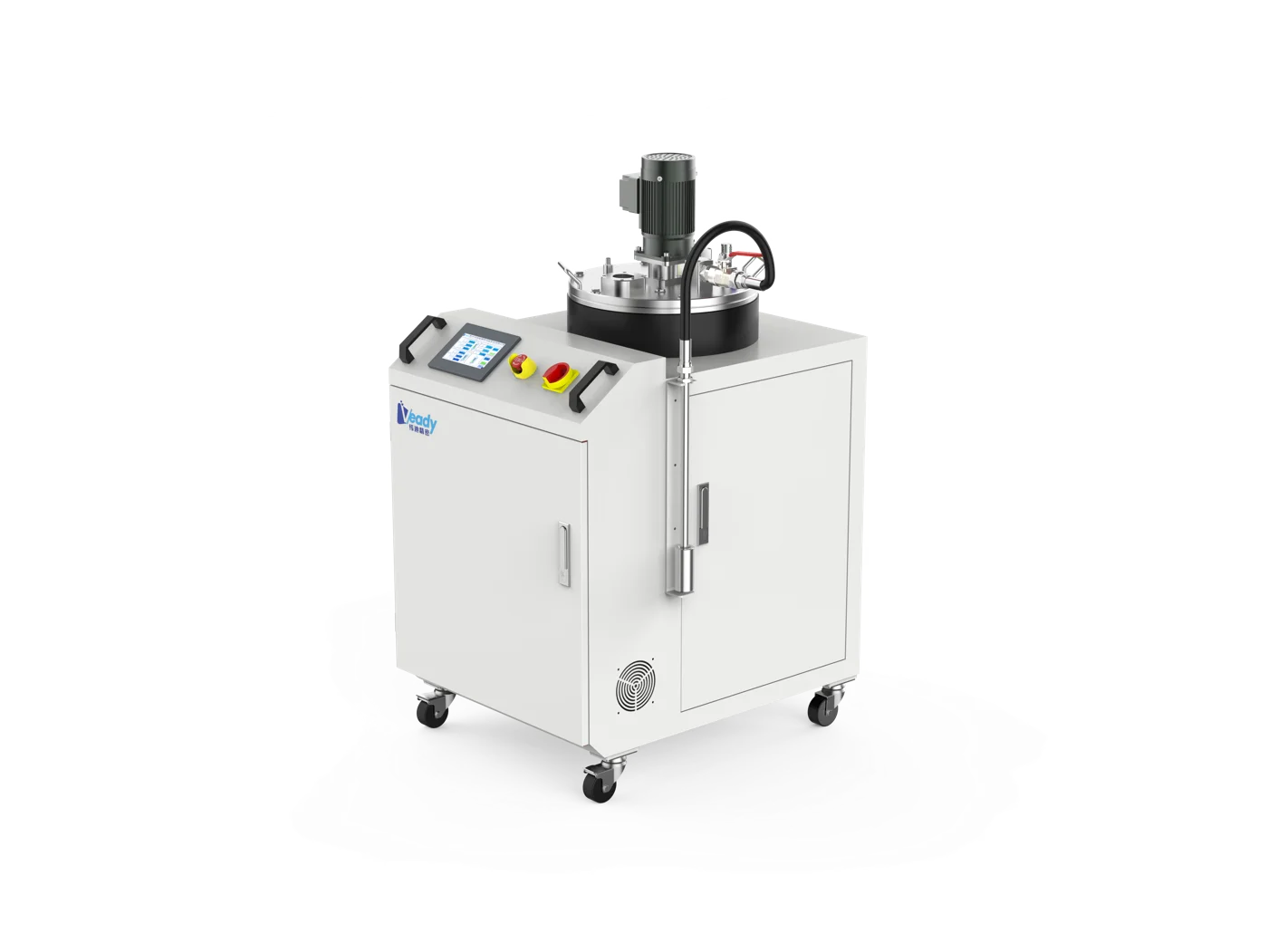
Single-Component Material Preparation System
- Model
- MFS45
The single-component material preparation unit is equipped with stirring, liquid level monitoring, heating, defoaming, circulation, reflow and other functions, enabling precise quantitative delivery and metering of single-component adhesives.
Explore this part of the adhesive process
Product Features:
It preprocesses the adhesive and cooperates with a single-component dispensing valve to achieve precise quantitative delivery and metered dispensing of single-component adhesives.
Specifications:
Suitable Adhesives:Epoxy resin, Polyurethane (PU), Silicone resin and other one-component adhesives.
Adhesive Compatibility
Epoxy resin, polyurethane and silicone resin are the three families this unit is built around, and most other one-part adhesives used in industrial assembly sit comfortably alongside them. Filled epoxy and PU grades are heavy enough to settle when left still, which is where stirring and circulation earn their place in the process. Silicone grades generally ask for gentler handling and a steady tank temperature. Because preparation happens here rather than at the valve, material reaches a single-component liquid dispensing system already conditioned and the valve only has to meter it accurately. Two-part chemistry does not belong on this unit — the A and B sides have to be proportioned and mixed, which is a different machine.
Applications
- Electronics and control boards – one-part epoxy or silicone for component bonding and local encapsulation, with the valve laying down small, repeatable deposits through a long shift.
- Motors, transformers and power tools – encapsulation and bonding on parts handled in batches; the tank keeps a working supply available so the cell is not stopped for hand-mixed refills.
- Automotive and EV component assembly – continuous work where the same grade is dispensed for hours and the prepared material feeds an adhesive dispensing system at a steady rate.
- Medical, optical and sensor assembly – small parts that cannot tolerate a bubble or a void, where defoaming before dispensing pays for itself in reduced rework.
- Appliance and hardware manufacture – general bonding and sealing duty, with the unit working as the feed stage behind a precision glue dispenser at a bench or in a cell.
Technical Support & Model Matching
As the manufacturer, Suzhou Veady Precision Glue Dispensing Systems Co., Ltd supports your project from selection through startup. Share your adhesive, substrate, throughput and accuracy target, and our engineers help match the right dispensing, potting, vacuum potting or material preparation configuration. We also guide installation and commissioning, process parameter setup, and fault troubleshooting, and provide factory-direct service and bulk supply for long-term production.
FAQ
Q1 Can this unit feed the dispensing valve or head I already use?
Yes. It is designed to sit ahead of a single-component valve rather than replace it, delivering conditioned adhesive to an industrial glue dispenser at a steady rate. Bench valves and line-mounted heads both work, as long as the hose and pump suit the adhesive. Send us the valve model and nozzle size and we will confirm the interface before the unit is built.
Q2 Which tank capacity suits my production?
Work from consumption and routine rather than tank size on its own. Low-volume bench work and short runs are comfortable with a smaller tank, where quick changeover matters more than holding a large reserve. Long unattended runs suit a larger tank because operators top up less often, though it takes more floor space. As a dispensing machine manufacturer we size the tank against your shift pattern, so tell us your hourly consumption and the longest run without attention.
Q3 Which parts of the machine come into contact with the adhesive?
The tank, the stirrer, the level sensor, the outlet and the hose run through to the valve are all wetted, and those are the parts to check against your chemistry. One-part epoxy, PU and silicone are standard for this unit. If you plan to switch grades, or you run a filled material with an aggressive additive, tell us at the enquiry stage so the wetted parts are specified for it.
Q4 What maintenance does the unit need?
Keep it consistent: wipe the tank and stirrer shaft after each material change, check the lid seal and outlet for cured residue, and confirm the level sensor reads correctly. Reflow returns adhesive from the line at the end of a shift, so use it rather than leaving material standing. The hose between the tank and the precision glue dispenser deserves the most attention, because that is where adhesive sits longest.
Q5 How long can prepared adhesive stay in the tank?
It depends on the adhesive's own pot life and on the temperature it is held at, so no single answer covers every grade. The unit keeps conditions stable — stirring, circulation and controlled heating slow the changes that make material unusable. Prepare for the shift you are about to run rather than filling the tank for the week, and do not leave adhesive standing in the hose or in a liquid dispensing system downstream, where it cools fastest.
Q6 Can one unit run more than one adhesive?
Yes, if the changeover is deliberate. Drain and clean the tank, stirrer and outlet before the next grade goes in, and check that seals, hose and valve suit the new chemistry — an epoxy and a silicone can call for different wetted materials. Where the unit works as the adhesive mixing machine for several one-part grades, keep a dedicated hose and valve set for each and label them. Tell us the grades you plan to run so the unit is specified for all of them.
Technical specifications
| Parameter | Specification |
|---|---|
| Equipment Name | Single-Component Material Preparation System |
| Model Number | MFS45 |
| Vacuum Negative Pressure | ≤2 mbar |
| Heating Temperature | Room temperature to 80 °C |
| Dispensing Precision | ≤±3% |
| Dispensing Speed | 1-5 g/s |
| Tank Specification | 10L, 20L, 45L, 60L (Optional) |
| Power Rating | AC220V, 50 Hz, 2.5 kW |
| Operating Air Supply | 0.5-0.7 MPa |
| Overall Dimensions | L=700 × W=850 × H=1430 mm |
| Machine Weight | Approx. 120 kg |
Technical specifications for the listed model. For application engineering, share your adhesive datasheet, part drawing and production requirements.